
Yorkshire Building Society has not deducted any tax from my savings interest payments.
It now says in its leaflet that it is now my responsibility to contact the tax office.
Can I insist they take this tax at source using my tax code? I am now in my 90s and need things to be simple and easy.
It used to take this tax every year so why have they now changed it?
Helen Kirrane of This is Money replies: The rules on how savings interest tax is taken changed in 2016 with the introduction of the Personal Savings Allowance (PSA).
The PSA sets out how much interest you can earn on your savings before it is taxed at your marginal rate.
Basic rate taxpayers have a PSA of £1,000, if they exceed this, they will pay 20 per cent tax on their savings interest over this sum.
Higher rate taxpayers have a PSA of £500, on breaching this they will pay 40 per cent tax on their savings interest above the limit.
Additional rate taxpayers have no PSA and pay interest on all their savings interest at a rate of 45 per cent.

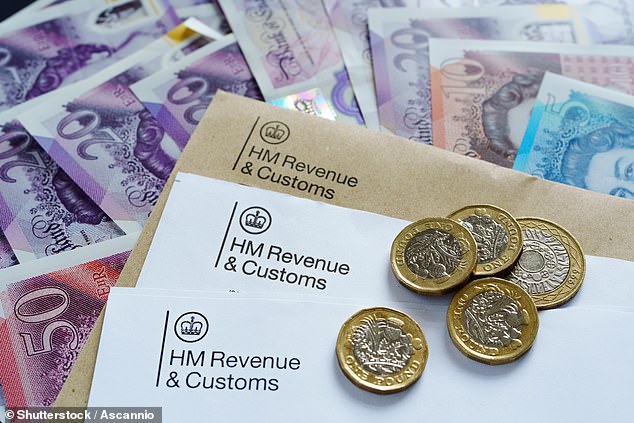
Tax tangle: Our reader used to have savings interest tax taken from their tax code but their building society no longer does this
With the introduction of the PSA, HM Revenue & Customs no longer required banks and building societies to deduct tax at source as interest rates were low enough in 2016 that most savers would not exceed their PSA.
Now interest rates are much higher, more people are finding themselves in a position where they must pay tax on their savings interest.
If you have breached your PSA, your bank or building society will still inform HMRC and it will be taken at source from your tax code.
If you are a basic rate taxpayer, and you have not heard anything from the taxman, you’ve likely been paying the right amount of tax.
More on why this is, and what you need to do, from our experts below.
Anna Bowes of The Private Office replies: When the PSA was introduced in April 2016, according to the Government, the majority of savers would not have needed to pay any tax on their savings interest, as the amount they would have received would be less than the allowance.
As a result the payment of savings interest was changed and from that point was paid without the deduction of tax.
However, for those that do earn interest that is more than the PSA, many will pay the tax due via the Pay As You Earn (PAYE) scheme, as all savings providers are still obliged to inform HMRC about any interest that has been earned in the preceding tax year.
So, this process should happen without intervention.
However, it makes sense to check your tax code each year, to see if HMRC has included savings interest and if this is in line with the amount you actually earned or are expecting to going forward.
If an underpayment of tax arises, this can be collected by a further adjustment to a later year’s tax code, or in some circumstances by a lump sum payment.
Ultimately though it is the responsibility of the tax payer to ensure that they are paying what they should, regardless of whether this is via PAYE or self-assessment – if they fail to do so, they are in danger of facing a penalty plus interest for late paid tax, or worse!
It is therefore in everybody’s interest to carefully check their tax code each year to make sure that HMRC is estimating the right amount of savings interest that is expected to be earned.
If not, they should inform HMRC and their tax code will be adjusted.
Circumstances will often change throughout the year which would have an impact on this expected interest, for example if a large amount of the money on deposit is spent, or added to, or if the interest rate earned changes.
If this is the case, savers should contact HMRC to update them.
If you are at all unsure about whether you are paying the right amount of tax, check with HMRC or a tax specialist.
A Yorkshire Building Society spokesman replies: Since April 2016, most savers benefit from the PSA, which means they can earn up to £1,000 (or £500 for higher rate taxpayers) in interest each year without paying tax.
Because of this, HMRC no longer requires banks and building societies to deduct tax at source.
As a savings provider, we have no visibility of customers full financial circumstances or other sources of income.
That means we can’t accurately assess any tax liability, so HMRC now collects any tax due directly – either through customers tax code or self-assessment.
This approach ensures savers receive their interest in full and only pay tax if it’s actually owed.
This change makes the system simpler and based on the individual circumstances of savers.
SAVE MONEY, MAKE MONEY

Sipp cashback
Sipp cashback
£200 when you deposit or transfer £15,000

4.53% cash Isa
4.53% cash Isa
Trading 212: 0.68% fixed 12-month bonus
£20 off motoring
£20 off motoring
This is Money Motoring Club voucher

Free shares bundle
Free shares bundle
Get free UK shares worth up to £200

4.45% Isa with bonus
4.45% Isa with bonus
Now with no penalty for withdrawals
Affiliate links: If you take out a product This is Money may earn a commission. These deals are chosen by our editorial team, as we think they are worth highlighting. This does not affect our editorial independence. Terms and conditions apply on all offers.
#wont #building #society #savings #tax #tax #code #anymore