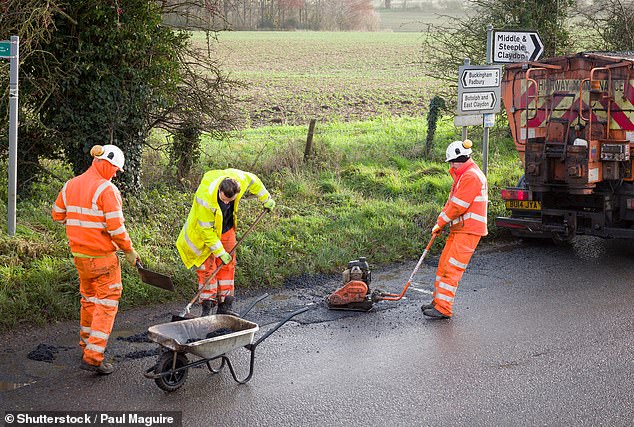

Motorists fed up of slaloming through a minefield of potholes on Britain’s roads could see some light at the end of the tunnel with the latest data suggesting a big step up in road surface improvements in the last 12 months.
Figures from the Road Emulsion Association (REA) indicate that 44.4 square metres of ‘surface dressing’ – treating around 4,000 miles of road – was laid between April and September of 2025.
This is up from 38.5 square metres in the same period in 2024, marking a 15 per cent increase.
Rather than laying asphalt over the top of the rutted road, surface dressing is a treatment that is applied to preserve and seal the surface.
It makes the road surface waterproof and protects against frost and water damage, essentially filling potholes and preventing them from forming again.
And it appears more of this type of road repair is set to come, according to latest reports.

Is the Government finally getting a grasp on the pothole epidemic? The Road Emulsion Association says there’s been a 15% rise in road surface dressing to permanently repair craters
Surface dressing typically uses a combination of polymer modified bitumen emulsion and chippings, which are added on top to improve grip levels.
And, according to the REA, sales of bitumen emulsions have increased by a quarter in the past two years.
The figures have been published in the wake of a scathing report by the House of Commons’ Public Accounts Committee, which suggested the Government ‘neither knows exactly how local authorities spend its funding, because it is not ring-fenced, nor what it wants to achieve with it’.

Experts say one of the best methods to keep a road pothole–free is to treat it with a preventative method, such as surface dressing (pictured)
Other industry report have also highlighted the inconsistent approach councils take to assessing the severity of potholes in their authorities – and determining which need fixing as a priority.
In response, the Government has started to make greater demands of councils, threatening to revoke road-maintenance funding if they don’t provide sufficient evidence of works.
In April, local authorities in England began receiving their share of the Government’s £1.6billion highway maintenance funding.
However, to qualify to receive the full amount, all councils in England are required to publish annual progress reports and prove public confidence in their work.
Local authorities who fail to meet these strict conditions will see 25 per cent of the uplift (£125million in total) withheld.

During surface dressing, a thin layer of bitumen and stones is rolled over the existing road (pictured). This prevents new cracks from forming and is much cheaper than resurfacing the road

Even cheaper approaches than surface dressing are available. Rejuvenation techniques, for example, reduce the brittleness of the bitumen in the road and ‘reset the clock’ on its decay
While these are signs that ministers and council leaders could now take a more measured approach to tackling potholes, the increase in road dressing seen this year is still far behind maintenance and repairs recorded a decade ago,
In fact, the dressing recorded this year is a third down compared with 2012, when 64.4 square metres were laid in the April to September period.
The REA’s consultant and secretary, Kevin Maw, said: ‘We reported a nine per cent increase in bitumen emulsion volumes in 2024, so to report a bigger increase for the second year running is encouraging.
‘We believe the surge in potholes over recent years directly correlates with the reduction in surface dressing,’ he added.
‘Investing in preventative highways maintenance is crucial to protecting one of the country’s biggest assets and it’s clear that this message is finally getting through. We hope it continues.’
Potholes consistently rank among British drivers’ biggest concerns, even overtaking the cost of insurance in a recent RAC survey.
The number of drivers falling foul of potholes and breaking down rose by 25 per cent this summer compared to the same season last year, according to the motoring group’s Pothole Index.
RAC patrols attended 5,035 pothole-related breakdowns between July and September for jobs such as broken suspension springs, distorted wheels and damaged shock absorbers. This was up from 4,040 during the same months in 2024.
This year’s figure is also significantly higher than the average number of these types of breakdowns typically recorded during the warmest months (4,372).
The RAC says the nation’s inability to get on top of the pothole epidemic is largely due to government and council’s ‘whack–a–mole’ approach to road maintenance up until now.

RAC patrols attended 5,035 pothole-related breakdowns between July and September for jobs such as broken suspension springs, distorted wheels and damaged shock absorbers. This was up from 4,040 during the same months in 2024

The RAC says the nation’s inability to get on top of the pothole epidemic is largely due to government and council’s ‘whack–a–mole’ approach to road maintenance up until now, where they would simply fill the pothole rather than retreat the road surface to protect it
Simon Williams, head of policy at the RAC, criticised authorities of becoming ‘obsessed’ with trying to fill potholes rather than treating the surface afterwards to ensure they don’t reappear.
Reacting to the REA’s report on Wednesday, Mr Williams said: ‘These new figures are a step in the right direction for drivers who are plagued by potholes on Britain’s roads every time they get behind the wheel.
‘We welcome more local highway authorities carrying out surface dressing work, as this is proven to extend the life of roads by 10 to 15 years by sealing cracks and stopping water getting in and, ultimately, stopping surfaces breaking down.
‘We hope even more surface dressing will be carried out going forwards as the Government is on board with the preventative maintenance message that the RAC, REA and the Road Surface Treatments Association have been advocating.’
He added: ‘We’re also very pleased to see the Government asking councils to show how much preventative maintenance work they’ve carried out over the last five years and how much they plan to do in this financial year. We remain convinced that prevention, rather than cure, is the answer to smoother, safer roads.’
#Government #finally #grasp #pothole #epidemic #Road #surface #improvements