
The cry of a distressed baby triggers a rapid emotional response in both men and women that is enough to make them physically hotter, researchers say.
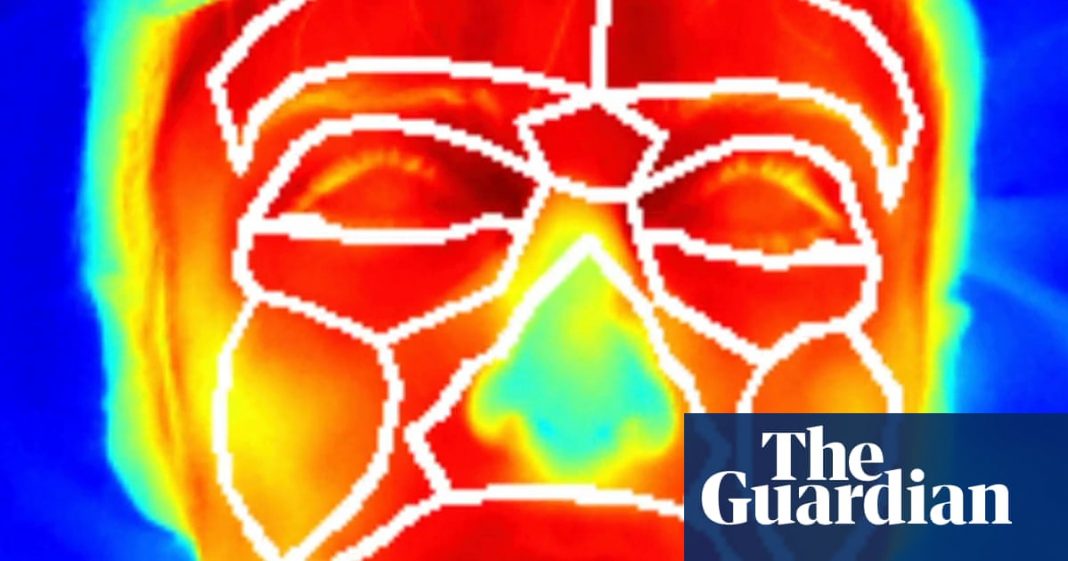
Thermal imaging revealed that people experienced a rush of blood to the face that raised the temperature of their skin when they were played recordings of babies wailing.
The effect was stronger and more synchronised when babies were more distressed, leading them to produce more chaotic and disharmonious cries. The work suggests that humans respond automatically to specific features in cries that ramp up when babies are in pain.
“The emotional response to cries depends on their ‘acoustic roughness’,” said Prof Nicolas Mathevon at the University of Saint-Etienne in France. “We are emotionally sensitive to the acoustic parameters that encode the level of pain in a baby’s cry.”
Evolution equipped baby humans with a hard-to-ignore wail to boost their odds of getting the care they need. But not all infant cries are the same. When a baby is in real distress, they forcefully contract their rib cage, producing higher pressure air that causes chaotic vibrations in the vocal cords. This produces “acoustic roughness”, or more technically, disharmonious sounds called nonlinear phenomena (NLP).
To see how men and women responded to infants’ cries, scientists played recordings to volunteers with little or no experience with babies. While listening, the participants were filmed with a thermal camera that captured subtle changes in their facial temperature.
The adults listened to 16 different cries over four sessions and rated whether the baby was in discomfort or significant pain. The cries were recorded from babies in different levels of distress, ranging from discomfort in the bath to feeling the scratch of a needle at a vaccine clinic.
Footage from the thermal camera showed that men and women responded to babies’ cries in much the same way. The wails with the most NLP, regardless of pitch, were rated as coming from babies in real pain and triggered the greatest changes in the adults’ facial temperature.
Writing in Journal of The Royal Society Interface, the scientists describe how NLP in babies’ cries produces an automatic response in men and women, suggesting people pick up on the acoustic features to distinguish between babies that are merely unhappy and those in real pain.
“The more pain the cries express, the stronger the response of our autonomic nervous system, indicating that we emotionally sense the pain information encoded in the cries,” said Mathevon. “No one had ever measured our response to cries like this before and it is too early to know if there will be practical applications one day.”
The study follows work last month from researchers in Denmark that challenges the claim that women are hardwired to wake up more easily than men when a baby starts crying. It found that men were as likely as women to be woken by wailing infants, despite mothers being three times more likely to get up and tend to the child.
The reasons for the disparity are up for debate, but Prof Christine Parsons, who led the team, suggested two potential factors. First, mothers often took maternity leave before fathers took paternity leave and learned how to calm their baby earlier. Second, when mothers were breastfeeding, it might be sensible for fathers to sleep through.
“Much of the previous work on adults’ physiological responses to infant crying has looked at heart rate, skin conductance, or even brain responses. So this study is innovating,” Parsons said. “People often assume there will be a clear distinction between men and women in how they respond to crying. The authors set out to test this, and found no evidence for a difference,” she added. “We were also surprised at how little difference there was between men and women.”