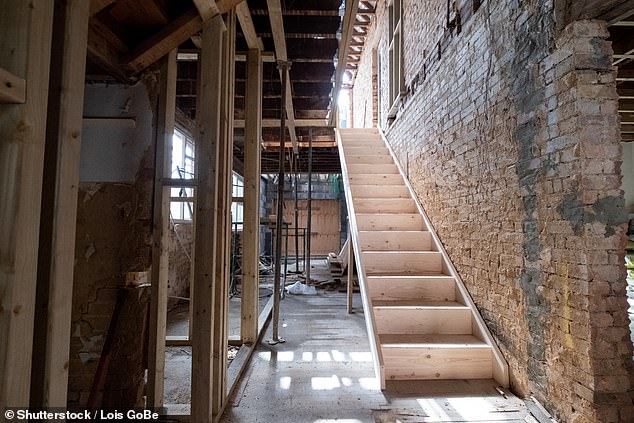

My partner and I are considering buying a doer-upper that we think we can add significant value to.
We have found a couple of opportunities on the market. However, while these properties will suit our needs for the next two to three years, we will likely need a bigger house soon as we plan to start a family.
When that time comes, our plan is to switch to a buy-to-let mortgage and release equity from the property to then eventually buy our family home. We have done our research on the rental market and the returns are good.
If we buy a doer-upper to live in, and then decide in three years to refinance and buy our next home, will we become liable to pay the stamp duty surcharge for second home buyers if we keep our first home as a rental?

Project: Our reader wants to buy a doer-upper as their first home, then buy their family home in three years and let the first one out – but they are worried about stamp duty
Ed Magnus of This is Money replies: Your plan could have its merits, particularly if your doer-upper ends up being worth a lot more than you pay for it, after factoring in all the building costs required to do the refurb.
But the stamp duty land tax ramifications for your next property make this plan more expensive than it would have been in the past.
Prior to 2016, the stamp duty rates on second homes were no different from what first-time buyers or home movers paid.
Now, this has all changed. First-time buyers get a special stamp duty exemption, while buy-to-let and second home buyers pay more.
First-time buyers only pay stamp duty on the purchase price above £300,000 while home movers start paying on the amount above £125,000.
For home movers, stamp duty starts at 2 per cent above a threshold of £125,000 and then steps up to 5 per cent above £250,000, until they breach the 10 per cent threshold at £925,000. Above £1,500,000 the tax rate rises to 12 per cent.
For first-time buyers, the first £300,000 of a property’s purchase price is tax-free and then the 5 per cent rate kicks in. Crucially, however, if first-time buyers purchase a property costing more than £500,000 they lose their exemption and pay the normal home mover rates.
In England and Northern Ireland, buy-to-let investors and second home buyers pay a 5 per cent surcharge above what those purchasing a property to live in incur. In Scotland and Wales the rates are slightly different.
The surcharge is added across the entire cost of the property, including the part that is zero rated for home movers and first-time buyers.
So, while a first-time buyer would pay no stamp duty on a £300,000 property, a buy-to-let or second home buyer would end up paying £20,000.
For expert advice we spoke to Mark Barrett, tax specialist at Property Tax Advice ltd and Phil Blackburn, tax partner at Lubbock Fine.

Tax trap: Stamp duty is levied at different rates above certain thresholds and has been tinkered with repeatedly over the years
What stamp duty will they pay for the first property?
Mark Barrett replies: Assuming that your property purchase is in England, then if you are first time buyers and you will occupy the property as your main residence, then if the property is not more than £500,000, you will be entitled to first-time buyers relief on stamp duty.
This is a significant saving as the first £300,000 is free from stamp duty, and you’ll only pay 5 per cent on the difference between the purchase price and the £300,000.
You may well have heard the rumours that at the Budget on 26 November, there might be changes to SDLT and council tax, but this is not of course known yet.

Mark Barrett, tax specialist at Property Tax Advice ltd
What stamp duty will they pay for the second property?
Mark Barrett replies: If when you eventually move to a new home, you keep this original property in your own names, then you will be liable for the second property surcharge.
The alternative is that if you feel this property rental will be the first of many investments and forms part of an overall financial plan for your lives. If this is the case, maybe opening a limited company is an option. This is a popular tactic used by property investors, which changes the way in which they pay tax. If you did this you could then sell your first, lower priced property to the company.
The company will have to pay stamp duty when it buys the property from you, but it will also mean that you do not have to pay the higher rate surcharge when you buy your second and larger home.
Phil Blackburn adds: When buying a second home, the government charges buyers an extra 5 per cent in stamp duty. This means that, if a property costs £600,000, the stamp duty rises to £50,000, compared with £20,000 at the standard rate.
Normally, the surcharge does not apply where a buyer is buying a home to replace their main residence, regardless of whether they have a second home already. However, keeping your main residence as a buy-to-let does not count as replacing it.
Therefore, in this case, the couple would have to pay a 5 per cent surcharge, as HMRC would consider them to be buying a second home.
There are, however, important caveats the reader should consider. If the first home is sold within three years of buying the new one, the surcharge can be reclaimed, provided the new property is genuinely used as the main residence.
For the couple, that would mean disposing of the original property, and ending the buy-to-let, within that three-year window.

Phil Blackburn , tax partner at Lubbock Fine
What other tax implications should they be aware of?
Mark Barrett replies: Renting out property can be profitable, but you will also need to be aware of what’s commonly known as the Section 24 impact on tax relief for the mortgage costs.
This means you will get tax relief on the mortgage interest of the rental property, but the relief is restricted to 20 per cent relief.
This restriction of tax relief can be expensive if one or both of you are already being taxed at the higher rate tax bands – but there are two potential options.
If your plan is to only have the one property as a rental, then keeping it in your own name is probably the right decision.
When you buy the property that you will rent out, make sure that you buy it as ‘joint tenants’ because that opens up the option for you to create a Deed of Trust and allocate more of the income to whichever of you as a couple is paying less income tax when you come to rent it out.
This limits the effect of the Section 24 if one of you has low or no income.
Phil Blackburn adds: The takeaway is straightforward: holding onto a first home to rent out may be attractive financially, but it triggers a materially higher stamp duty bill on the next purchase unless the original property is sold within three years.
Seeking professional advice is strongly recommended to ensure the rules are applied correctly and to avoid costly mistakes.
#avoid #paying #higher #stamp #duty #rate #move #current #home #buytolet