
Owners of leasehold homes were given a glimmer of hope that Government reforms could soon become a reality after a court ruled in their favour last week.
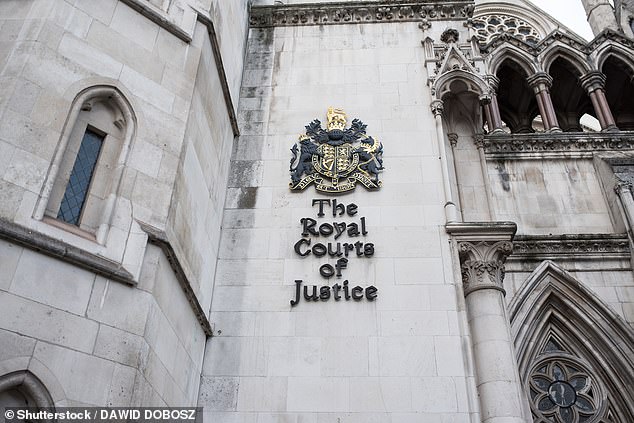
On Friday, the High Court dismissed a significant legal challenge brought by major freeholders against the Leasehold and Freehold Reform Act 2024.
The freeholders’ argument was that these reforms – which could make it cheaper for Britain’s 4.5million leaseholders to extend their leases or purchase their freeholds – would have infringed upon their human rights.
The challenge, which was heard in July this year, was brought by six major freeholders including the Duke of Westminster and Earl of Cadogan.
Harry Scoffin, campaigner and founder of Free Leaseholders welcomed the result in the High Court and labelled the freeholder challenge as an ‘affront to democracy.’
This latest development is good news for leaseholders – though some may be wondering why change isn’t coming more quickly.
It has been nearly 18 months since the Leasehold and Freehold Reform Act was passed in the last hours of the Conservative government.
We look at what this latest development means, what leasehold reforms are tabled, and when they are likely to happen.

Thrown out: The High Court dismissed a significant legal challenge brought by major freeholders against the Leasehold and Freehold Reform Act 2024
Will this decision be appealed?
Linz Darlington, managing director of lease extension specialists, Homehold says that while this latest ruling is a step in the right direction for leaseholders, the High Court decision is likely to be appealed.
‘While this ruling is an important next step in the leasehold reform journey, it is not the end of the battle,’ he says. ‘It seems likely that this decision will be appealed, and the outcome might be different.’
Even if the court ruled in favour of leaseholders again, the appeal could delay the process of leasehold reform by months.
Campaigner Harry Scoffin believes the government must now react fast and fulfil its manifesto promise to end leasehold.

Linz Darlington , managing director and founder of lease extension service Homehold
‘The High Court decision should embolden the government to move not just faster, but further,’ he says.
‘It’s not only arbitrary service charge demands from greedy freeholders killing leasehold and the flats market, gouging ground rents are doing it, too.’
Freeholders, however, say that the leasehold reforms would breach contracts they had entered into, undermine confidence in the property market and create uncertainty over existing properties owned by companies such as pension funds.
A spokesman for the Residential Freeholders Association said: ‘Property rights and contract law are fundamental drivers of domestic and global investor confidence in the UK.
‘This ruling opens the door for Government to intervene in markets far beyond the leasehold sector, a risk which will seriously undermine the UK’s reputation as a destination for business.
‘At a time when the Chancellor of the Exchequer is seeking £50bn of inward investment from pensions funds, the Government is creating significant uncertainty around the safety of existing assets which total £31bn in the leasehold sector.’
When will leasehold reforms become reality?
While the Leasehold and Freehold Reform Act 2024 was passed a year and a half ago, many of the changes it will enact haven’t yet been implemented.
One thing that has already changed is that, in February 2025, the requirement for a leaseholder to have lived in their property for two years before they can ask the freeholder to extend their lease was scrapped.
However, reforms to service charges and the cost of lease extensions will take longer to come into play.
The Government has said that it needs to complete further consultation on the rates and percentages used to calculate the cost of lease extensions before this can happen.
Darlington says: ‘Only once these rates have been set will leaseholders know whether their lease extension will be cheaper – and for some it could be more expensive,’ added Darlington.

Change is coming: The High Court’s judgement is a win for Britain’s 4.5 million leaseholders
He called on the Government to launch this consultation ‘without delay’.
There are also other pieces of what is known as ‘secondary’ legislation which need to be passed before the reforms can be enacted.
According to the Homeowners Alliance, this process will take ‘years, not months’.
What else do the leasehold reforms include?
Among the other reforms proposed in the Act is a proposal to remove what is known as ‘marriage value’.
Marriage value is the increase in value of a leasehold property as a result of a lease extension.
Put another way, it’s the financial benefit that results from merging part of the freeholder and leaseholder interests, hence the term ‘marriage’.
Under current law, where the unexpired term of the lease exceeds 80 years, no marriage value is payable.
However, when a lease drops below 80 years the marriage value must be split 50:50 with the freeholder.
There is also a clause to cap ground rent in lease extension calculations. Many leaseholders have to pay ground rent each year to the freeholder. This is a levy charged to reflect that leaseholders do not own the land their property is built on.
The Leasehold Reform (Ground Rent) Act banned ground rent being charged on new leases on homes purchased after 30 June 2022.
However, it doesn’t apply to existing leases, including those which are passed on from one owner to another when the property is sold.
Some leases have ground rents which rise at an alarming rate, sometimes hundreds of pounds a year.
At present when a leaseholder extends their lease, they must pay a sum of money to ‘buy out’ this future ground rent and the Act will make this cheaper by capping the ground rent in the calculation at 0.1 per cent of the flat’s value.
The Act will also seek to change the qualifying criteria to give more leaseholders the right to take over management of their building.
It should also create greater transparency over service charges and give leaseholders a new right to request information about service charges and the management of their building, administration charges and buildings insurance commissions.
It will also remove the presumption that leaseholders pay their landlord’s legal costs when challenging poor practice and give them a new right to apply to claim their legal costs from their landlord.
Could leasehold be scrapped altogether?
In March, the Government published a white paper in which it said it intended to ban the sale of new leasehold flats in England and Wales.
Housing minister Matthew Pennycook described the system as ‘feudal’ while announcing plans to move to the commonhold system, which is already standard for apartment owners in Scotland and other parts of the world.
In this system, each flat owner owns the freehold of their home and shares ownership of the building and the land it sits on with all of the other owners through membership of a ‘commonhold association’.
The Government has said it plans to make commonhold the default tenure by the end of the current parliament in 2029.
It had said it would publish draft legislation on this by the end of 2025, but this has not yet happened.
#Leasehold #reform #edges #closer #freeholders #lose #High #Court #challenge #Whats #homeowners