
I am evolving as a host, and coming to realise that those rich dishes that crown our festive tables shine brightest when surrounded by contrasting and lighter bites – before, around and after, rather than just on the day itself. I do enjoy angels and devils on horseback, devilled eggs, little sausages wrapped in bacon, mince tarts crowned with goose liver, fried breads and cheesy pizzette, buffalo wings, paté en croute, crab beignets, oysters Rockefeller, shrimp tostadas and rich tamales, but, for the most part, I save these for the parties earlier in December. For Christmas day itself, I start with lighter bites, as better preparation for the rich meal ahead. A trio of dainty, grazing canapes served alongside sparkling Alta Langa …
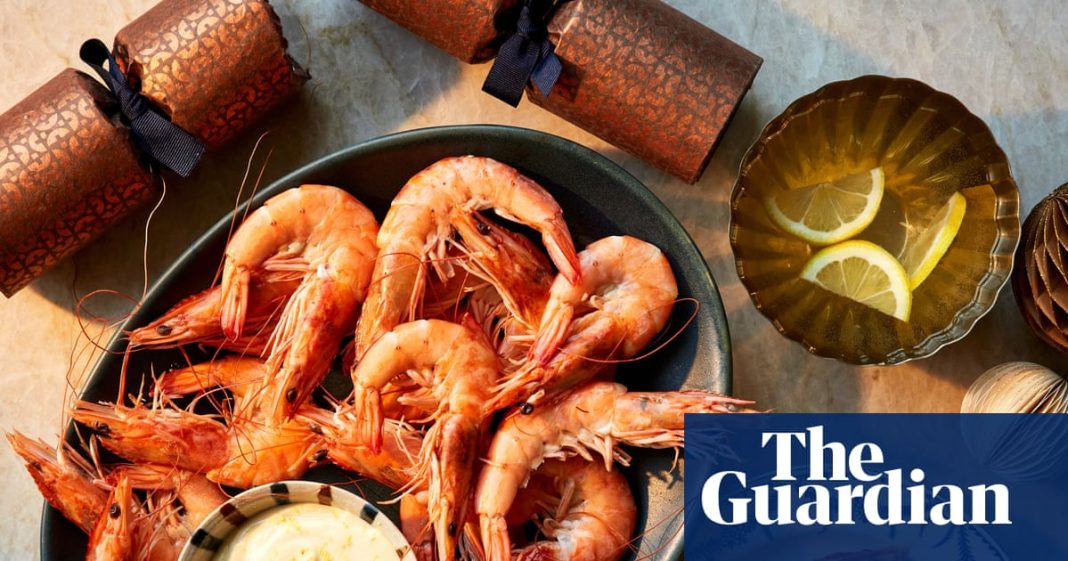
Chilled prawns with brandy mayonnaise
My grandmother, Ginny, knew how to entertain. She would spike her mayonnaise with brandy, and so do I – at home and at my restaurant Plaquemine Lock. Ginny used to boil her own shrimp, but the shell-on cooked frozen Atlantic prawns we have (the ones that come by the pint in the pub) are excellent, too.
Prep 10 min
Cook 10 min, plus cooling
Serves 5 as a starter, 10 as a canape
1kg sustainably-sourced cooked frozen shell-on prawns, or cooked Atlantic, raw vannamei or other tiger/king prawns
150g mayonnaise (homemade or shop-bought)
1-2 tbsp brandy
A couple of gratings of lemon zest (optional)
For the court-bouillon (if cooking the prawns from scratch)
3 celery sticks, trimmed and cut into chunks
1 large orange or lemon, skin on, cut into chunks
1 head fennel, trimmed and cut into chunks
1 small onion, peeled and halved
300ml white wine
3 litres water
60g salt
Defrost the prawns. If using raw prawns, put all the court-bouillon ingredients in a large pot and bring to a boil. Add the prawns, boil for a minute, then drain. Spread out the blanched prawns on a platter, leave to cool gradually to room temperature, then refrigerate for at least 20 minutes.
Put the mayonnaise in a pretty bowl, stir in the brandy to taste, and add a touch of grated lemon zest, if you like. Serve the chilled prawns on their large platter with the mayonnaise bowl alongside for dipping. Also, remember a finger bowl of warm water with lemon slices, and an empty bowl for the prawn shells.
Pinzimonio (raw vegetables and olive oil)
Pinzimonio is simply a plate of crudites and oil, but not just sticks of pre-cut carrots, anodyne celery sticks and watery cucumbers: a great pinzimonio is packed with sophistication and flavour.
Prep 15 min
Serves 10
1 head radicchio – tardivo di Treviso, if you can get it
1 small head puntarelle (½ a large one), woody base removed, spears halved lengthways, or 1 red or white endive, leaves broken from the base
1 bunch radishes, halved, leaves left on
1 head fennel, trimmed, halved and sliced at the last minute into thin wedges
4 slices sourdough, cut into chunks
200ml extra-virgin olive oil – the greener, grassier and pepperier, the better
1 tsp crunchy salt
Black pepper
Cut the radicchio leaves off the base and arrange them neatly on a platter with the puntarelle spears (or endive leaves), radishes, fennel and chunks of bread. Put the oil in a bowl in the centre, season with the salt and a few grinds of black pepper, and serve.
Artichoke, radicchio or celery frittata
It was at Trattoria Antica Torre in Barbaresco, Italy, in the middle of truffle season, that my understanding of frittata was shattered like an egg shell. At that restaurant, and many others in the region, they specialise in 40-yolk tajarin (tagliolini), for which a kilo of flour is mixed withthose yolks for the dough. This makes very rich pasta (particularly good with white truffles) – and a lot of leftover egg whites. Therefore, the thin, delicate and ethereal onion frittata they serve as an appetiser is made predominantly with egg whites, and a very different beast from the rich, thick omelettes I had known until this point – in fact, not a beast at all, but dainty, homely and elegant all in one go.
Prep 10 min
Cook 25 min
Serves 2 as a starter, or 6 to nibble on
2 medium artichokes, cleaned, trimmed, tough leaves pared, chokes removed, or ½ small head of radicchio, or 2 celery sticks
4 egg whites
2 whole eggs
20g grated parmesan
35g butter
Salt and black pepper
1 tbsp extra-virgin olive oil, or any vegetable oil
Slice the artichoke or radicchio extremely thinly lengthways (about 1-2mm thick); if you’re using celery, slice it across or on the bias. In a bowl, beat the egg whites, whole eggs and parmesan with a fork until completely smooth.
Melt 25g butter in a 28cm nonstick frying pan on a medium heat until it starts to foam, then add the vegetables and season – enough also for the egg that is to follow. Saute for three minutes, until tender but with a little bite, then add the beaten egg mixture, distributing it evenly; use the back of a spoon to fill in any gaps. Fry for four minutes, or until the egg is almost set.
Grease a plate with the oil and turn out the omelette on to it. Add the last 10g butter to the frying pan and, when it foams, slide the omelette back in and fry for two to three minutes more, until delicately coloured. Turn out on to a clean plate and serve after it has cooled to room temperature.